
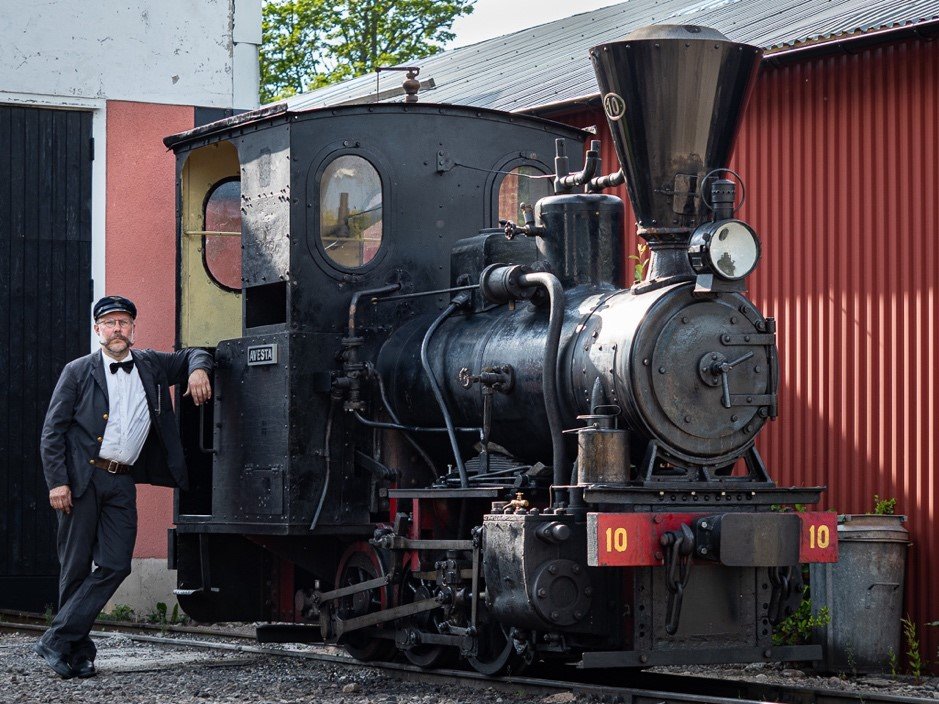
Members of the association Östra Södermanlands Järnväg (ÖSlJ) you are entitled to unlimited free trips in 3rd class and will receive our newspaper ÖSlJ-nytt (“ÖSlJ-news”) four times per year. The paper contains articles about current projects, as well as articles about historical and technical subjects related to Swedish 600 mm-railways.
As a member of the association you also have the possibility to partake in the railway operations.

Membership fees
- Full membership: 500 SEK/year
- + Additional family member: 250 SEK/year
- + Additional family member 6-16 yrs: 125 SEK/year
- Juridical person (business): 5500 SEK/year
- Permanent membership (lifetime): 5000 SEK
- Full membership (outside Sweden): 600 SEK/year
Active members
A railway undertaking is unexpectedly multi-faceted. Running trains doesn’t just require staff to drive the trains, but rather volunteers who every year dedicate thousands of hours behind the scenes. To the right is small selection of different areas who cooperate in order to make the trains be able to run every summer.
From a government agency standpoint, ÖSlJ is regarded as almost any other railway company. The Swedish Transport Agency acts as a supervisory authority and requires that operations and maintenance of rolling stock and infrastructure is done in a safe manner. Volunteers who participate in safety critical tasks are therefore subject to regular health exams and internal courses. There are however lots of things to do which aren’t safety critical!
As a new member you must realise that the learning curve can be very long. We handle objects with irreplaceable historic values, and doing something the wrong way might result in damage to both yourself and the objects. New volunteers can’t expect being entrusted with more advanced tasks directly. Patience and training are required before being allowed to work with more complicated tasks.
For a better understanding of what’s going in behind the scenes, please see our blog.
Vi can find things to do for anyone. There’s no requirement of having previous experience, just willingness to learn. Contact us today!

From brakeman to locomotive driver
The starting point for new volunteers is usually becoming a shunter and brakeman. It is a basic course where the participants are given opportunity to familiarise themselves with the basics of railway traffic.
After at least a year training continues to enable volunteers to work as guards onboard the trains. Courses for driving light diesel locomotives etc. are also available at this point. People interested in steam locomotives may start as apprentice firemen.
Apprentice firemen learn about the basics of firing locomotives and their workings. The driver remains responsible until the apprentice has sufficient knowledge to fire a locomotive without supervision. The training gradually turns more into perfecting one’s driving skills. After a few years, one finally reaches a high enough skill level to be able to drive a steam locomotive themselves.
For those not interested in driving locomotives there’s the option to work as a stationmaster, dispatching trains in a safe manner between stations. This is a very large responsibility, and as such requires volunteers to be very well acquainted with operational rules and procedures.
Participation in railway operations requires the following:
- At least 18 years of age (except brakemen and ticket staff).
- Passed health exam, to exclude any risk of serious health conditions.
- Fluency in the Swedish language.
Maintenance of rolling stock and infrastructure
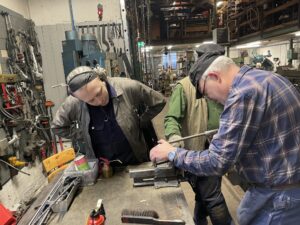
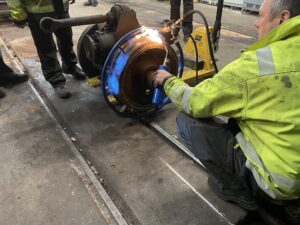
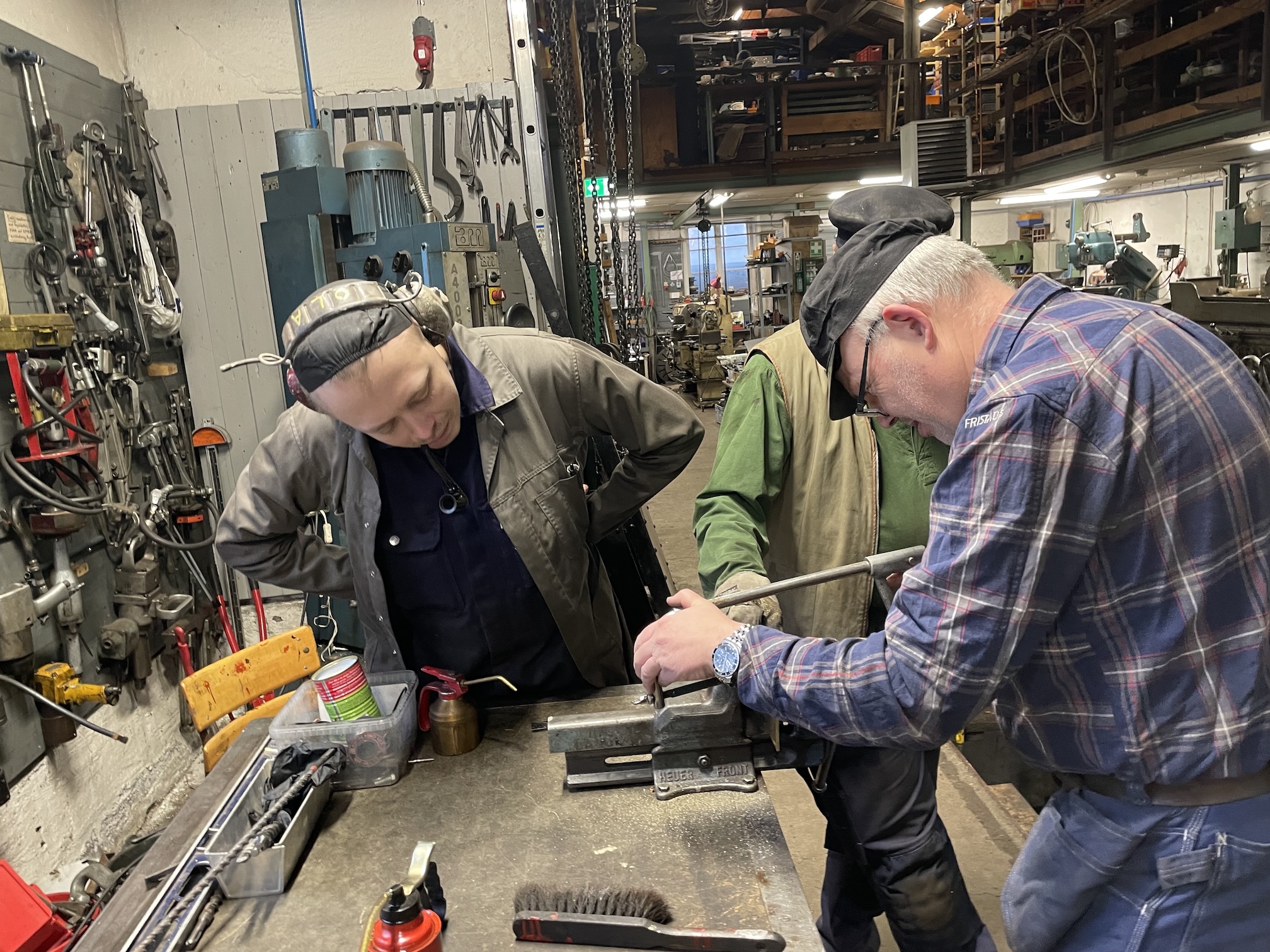
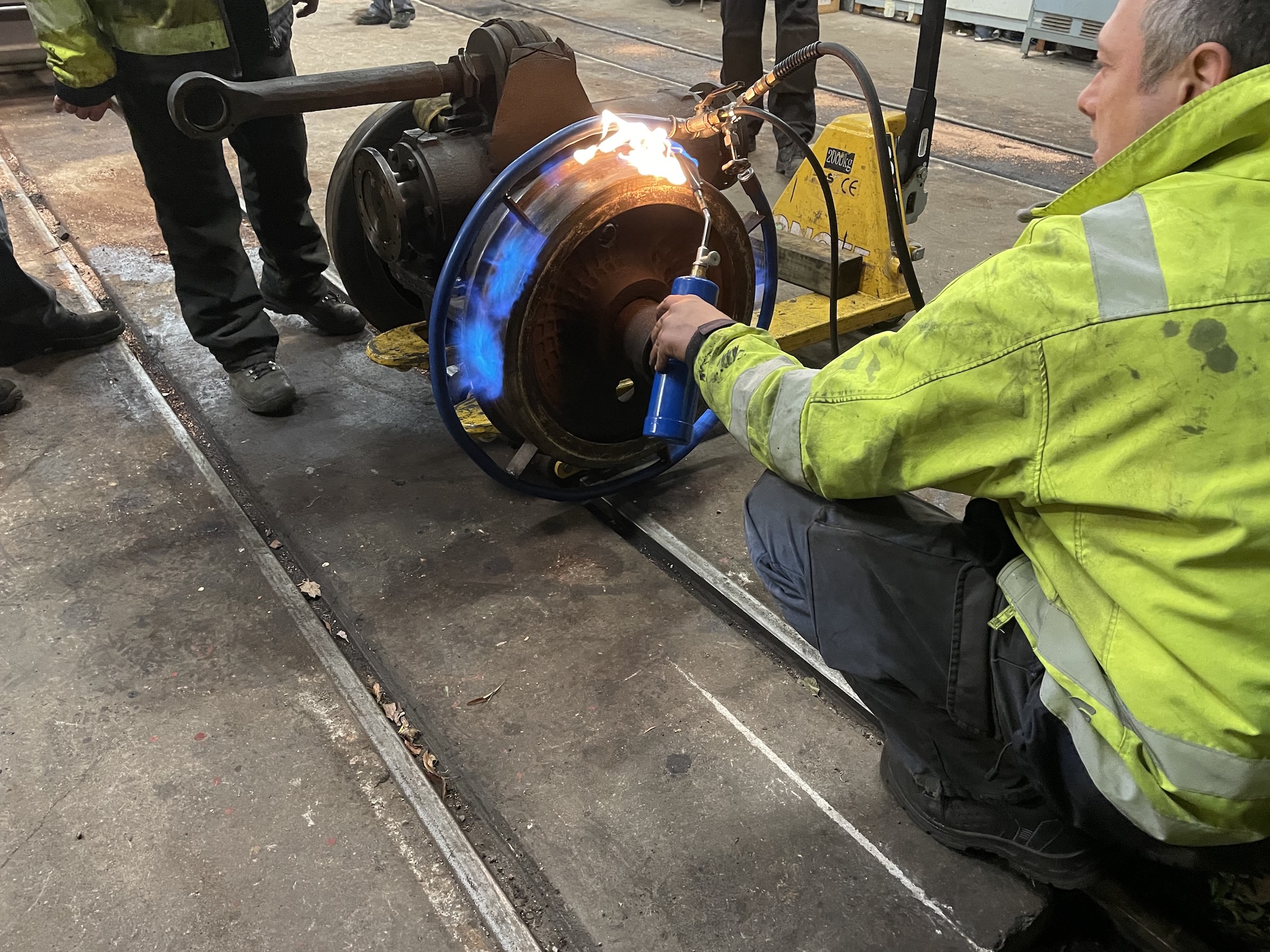
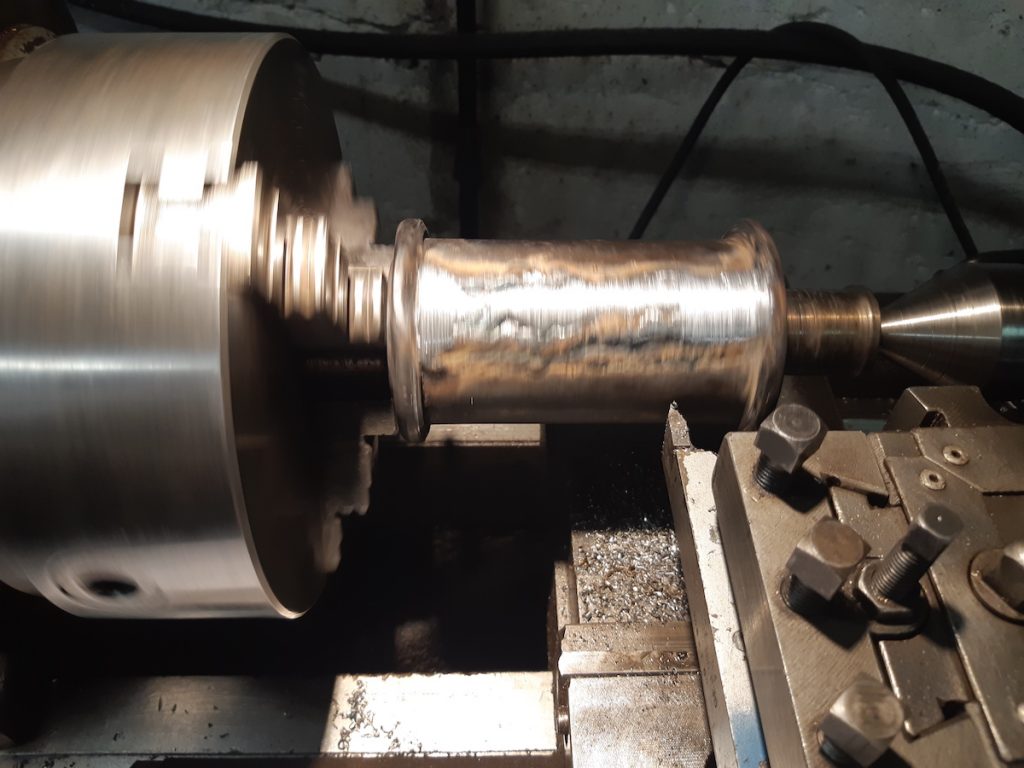
When trains are not running, work must be carried out on rolling stock and infrastructure. Locomotives and carriage need both acute repairs and larger overhauls to properly function. New volunteers are given to find their way around our workshop and learn how different machines work. With enough experience, you’ll eventually be given opportunity to work with more complicated repairs.
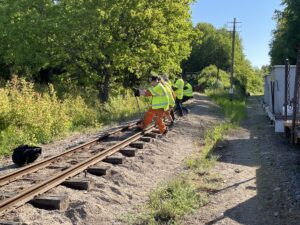
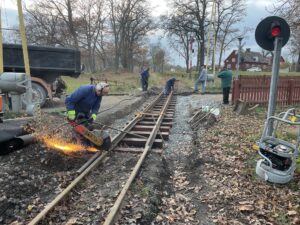
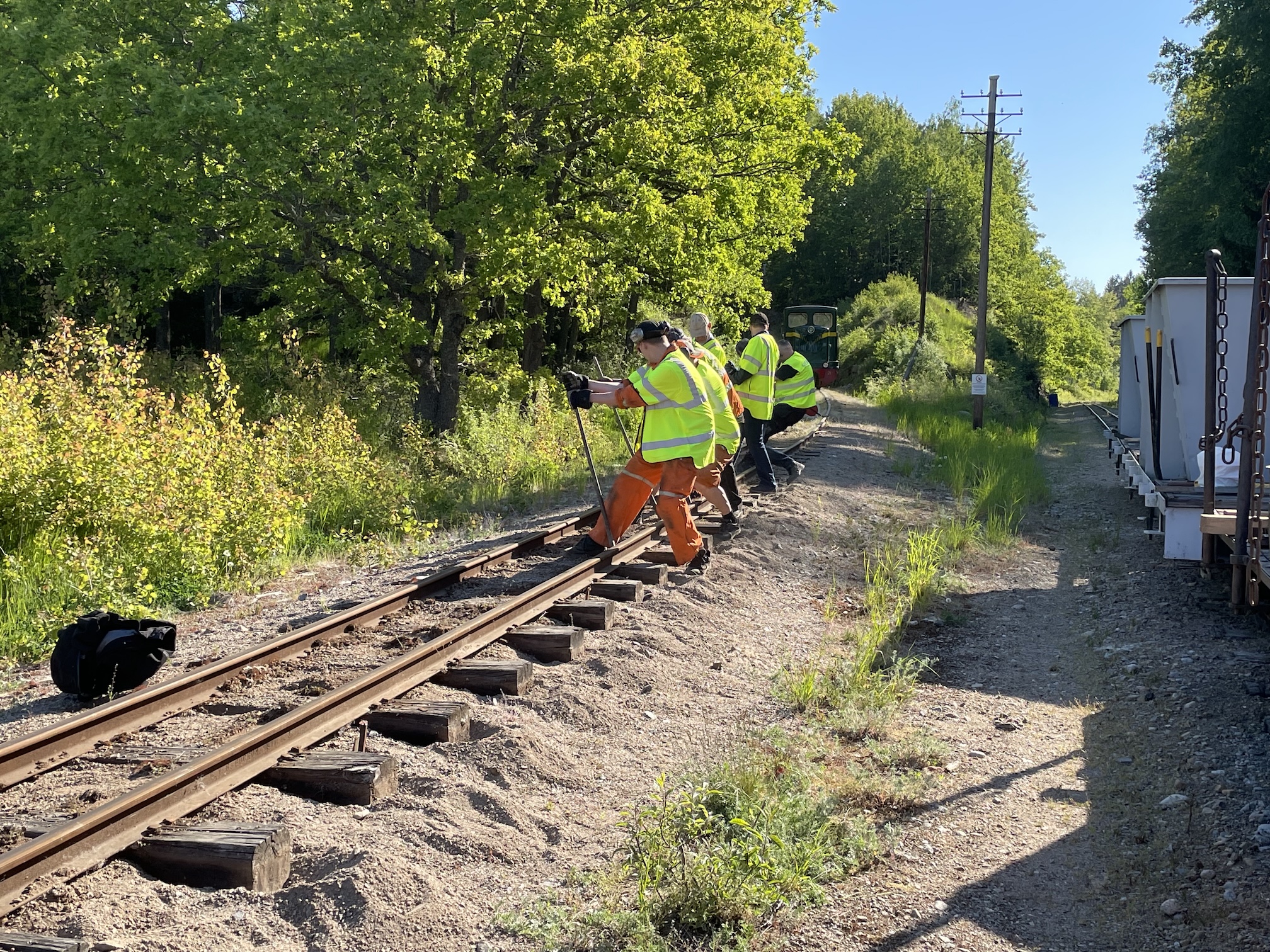
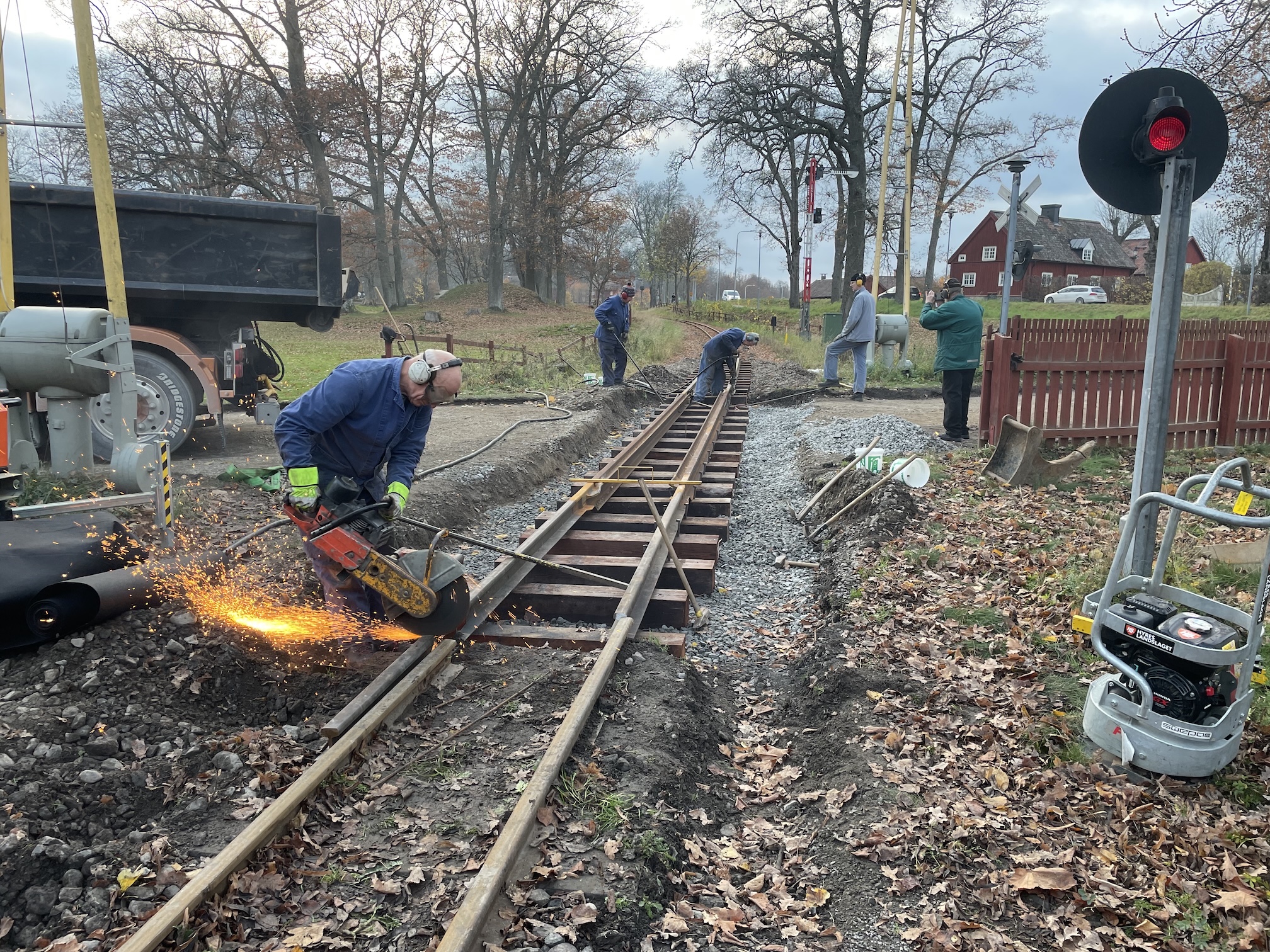
Trackwork is carried out all year round. The work may be tiring, but there are plenty of machines which simplify the work. A major advantage is that work is almost always carried out in beautiful nature.
Property management
The railway manages several stations, workshops and sheds along the line. There are also several gardens to tend to. If you like working with your hands but rather not get involved with the operational part of the railway, you are still most welcome. During the summertime there’s also a need to staff the railway café.
Administration
Several volunteers carry a significant load by handling administrative tasks from home. A lot of paperwork is necessary for everything to run smoothly, for example:
- Updates to operational rules.
- Economy and member management.
- Management of staff and their competences/permissions.
- Planning of timetables.
- Planning of vehicle overhauls and track work.
- Management of IT-systems.
- Handling and evaluation of safety related incidents.