
Common classifications of passenger carriages
A, B, and C means a passenger compartment with first, second and third class respectively.
D means the carriage has a compartment for transporting mail.
F means the carriage has a compartment for transporting freight.
The suffix –o means the carriage has bogies.
Our carriages are classified after original railway, technical classification, and lastly a running number.
AOJ Co 1
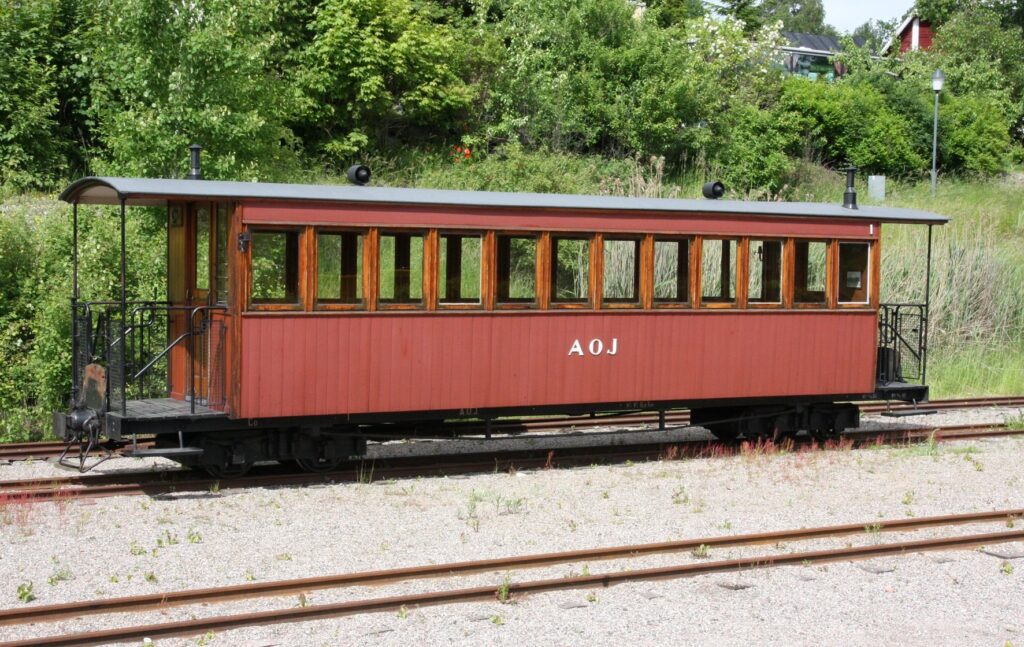
This carriage was built by Decauville in 1898 as HRRJ Co 8, and was brought to AOJ in 1907. It was sold to Munkedal in 1935 and became MJ Co 52. When MJ was rebuilt to standard gauge the carriage became superfluous and was converted to a cottage. It was brought to ÖSlJ in 1964 and was reconstructed as an AOJ-carriage in 1969.
HRRJ Coö 6
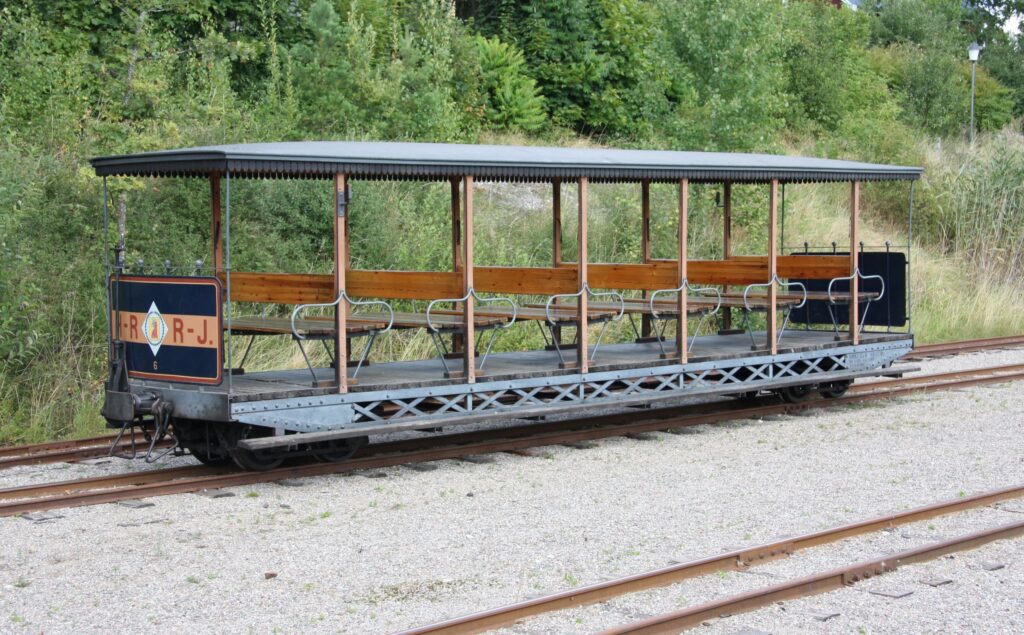
Helsingborgs mechanical workshops built this carriage in 1981, modeled after Decauville’s summer carriages. It was sold to Råå mechanical workshops in 1909. Unfortunately only the running gears are original, the rest of the carriage has been reconstructed at ÖSlJ. It was put into operation in 1971.
HRRJ CFo 7
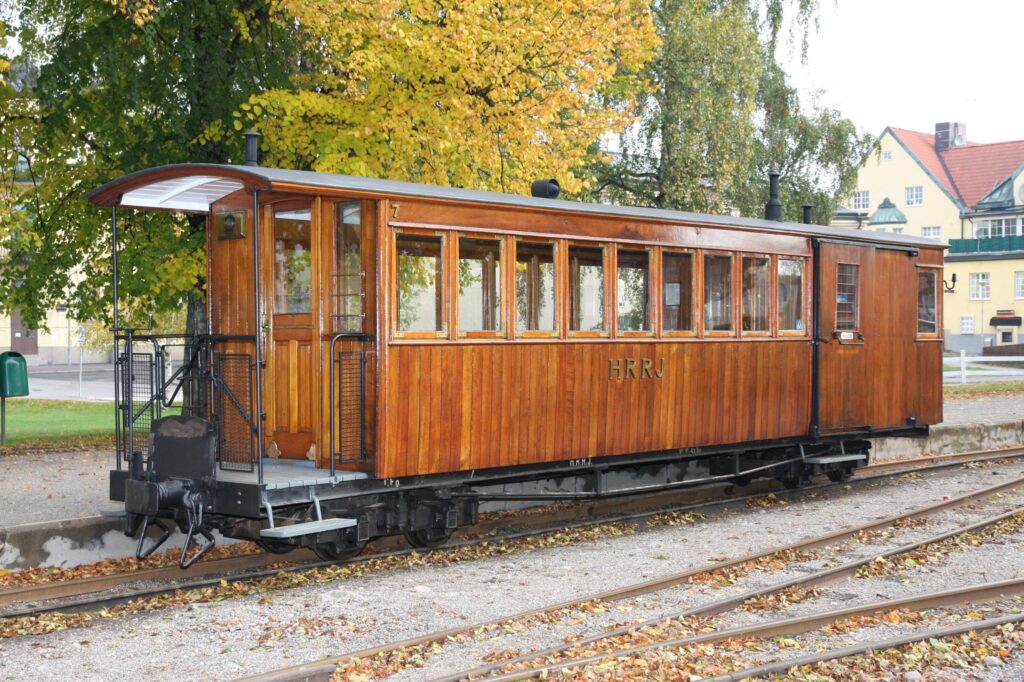
This carriage is a sibling to AOJ Co 1, built by Decauville in 1898 and sold to AOJ in 1907. It was repurposed at AOJ and was sold to Munkedal in 1935, where it, like its sibling AOJ Co 1, was turned into a cottage. It came to ÖSlJ in 1960 and was reconstructed as a HRRJ-carriage.
JGJ Co 2
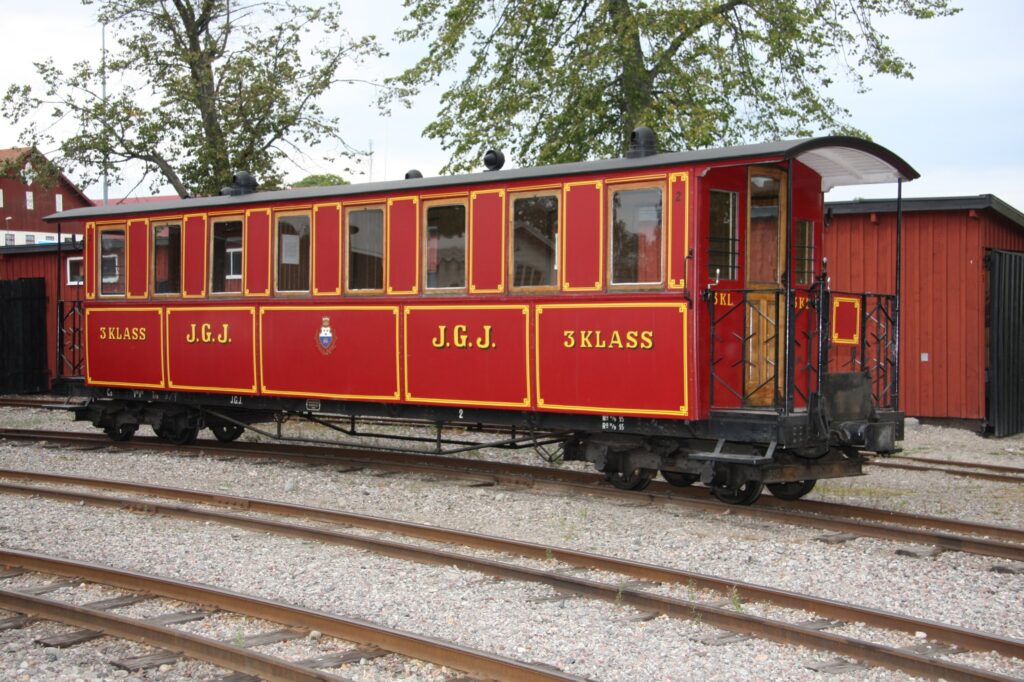
VABIS (The limited carriage company in Södertälje, today named Scania) built this carriage in 1893. The body was sold as a cottage in 1935, and it stayed that way until it came to ÖSlJ in 1977. Here, the body was renovated and placed on top of the framework of JGJ Co 5. It has been in operation since 1995.
The carriage is one of the first swedish-built passenger carriages of the type that VABIS developed and later became the most common type of passenger carriage at the Swedish 600 mm-railways.
JGJ Co 10
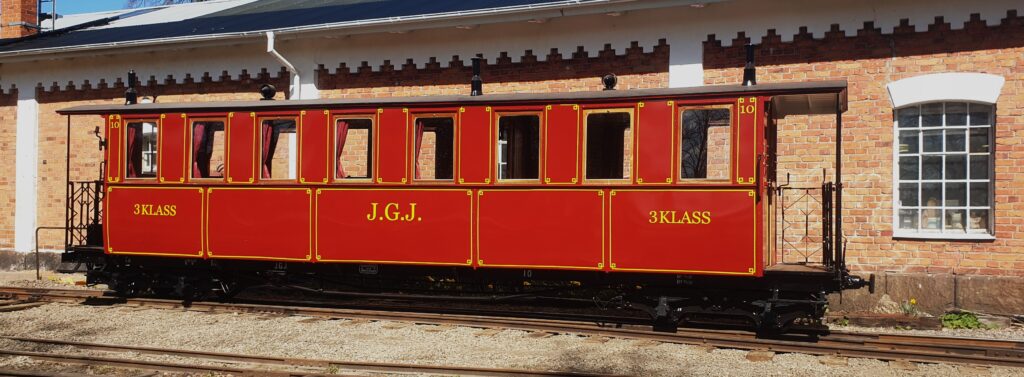
The carriage was built by Södertelge workshops in 1900 in a series containing two carriages, the other carriage being a combined second and third class carriage, classified BCo 9. The carriage was sold to a private owner in 1936 who used the carriage as a cottage around the Tenhulta lake in Småland county.
It was brought to ÖSlJ in 2000. The overhaul started with the framework in the vicinity of Stockholm in 2007. The body was renovated in Mariefred between 2012 and 2019. Has been in operation since 2022.
JGJ Co 11
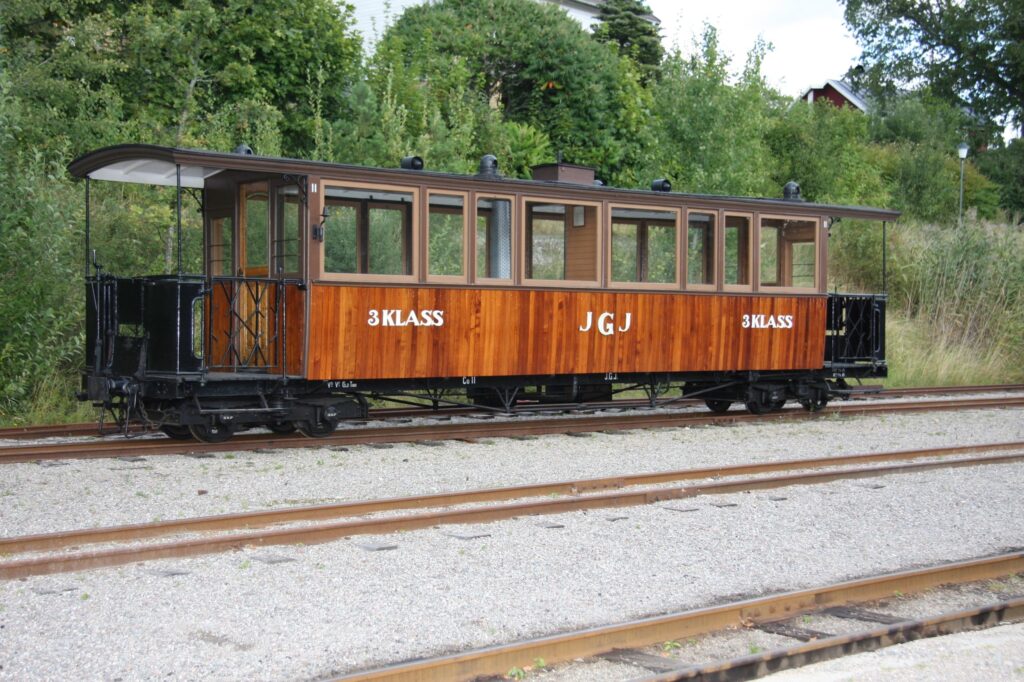
Kosta Foundry and Workshops originally built this carriage for HRRJ as a summer carriage modeled after Decauville’s designs, but it was soon retrofitted with windows along the whole length of the carriage. It arrived at JGJ in 1908 and was retrofitted several times, for instance in order to be compatible with the rail cars that JGJ built. It was sold to Aspa pulp mill in 1935 and from there came to ÖSlJ in 1959 where it entered service almost immediately. Following some renovations it’s still in use.
JGJ CNo 41
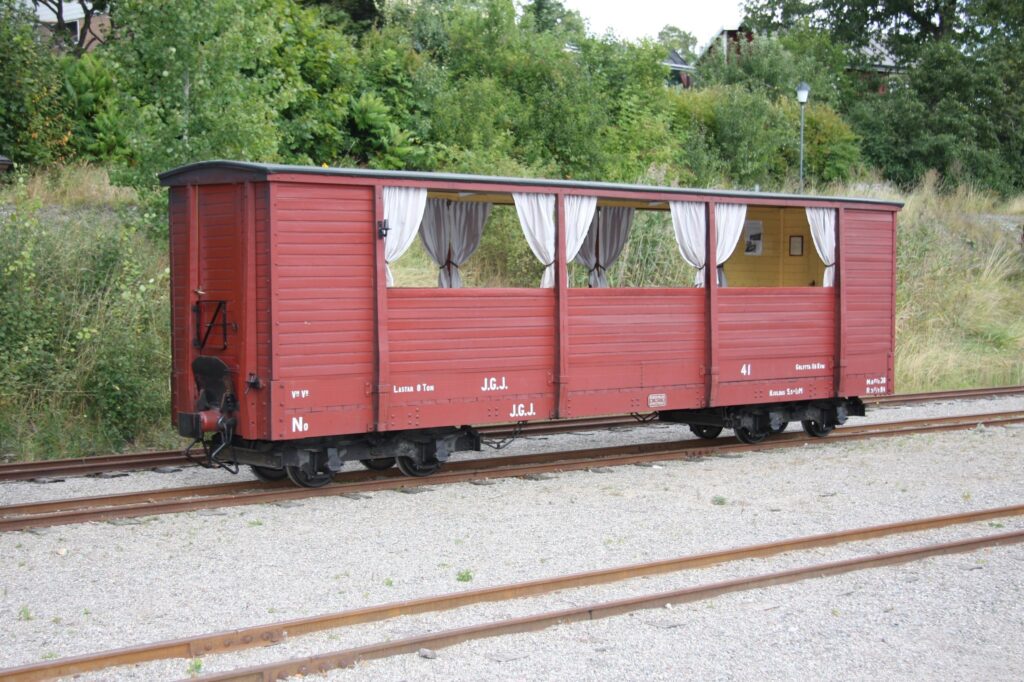
This summer carriage was also used for transporting freight, among other things, sewing machines from Husqvarna. It’s built by Södertälje workshops in 1907. It was used for JGJ’s excursion trains during the summers. The body has been reconstructed at ÖSlJ, but the framework is still original. It has been in use since ÖSlJ operated at Lina brickyard in the early 1960s.
KLJ BCo 103
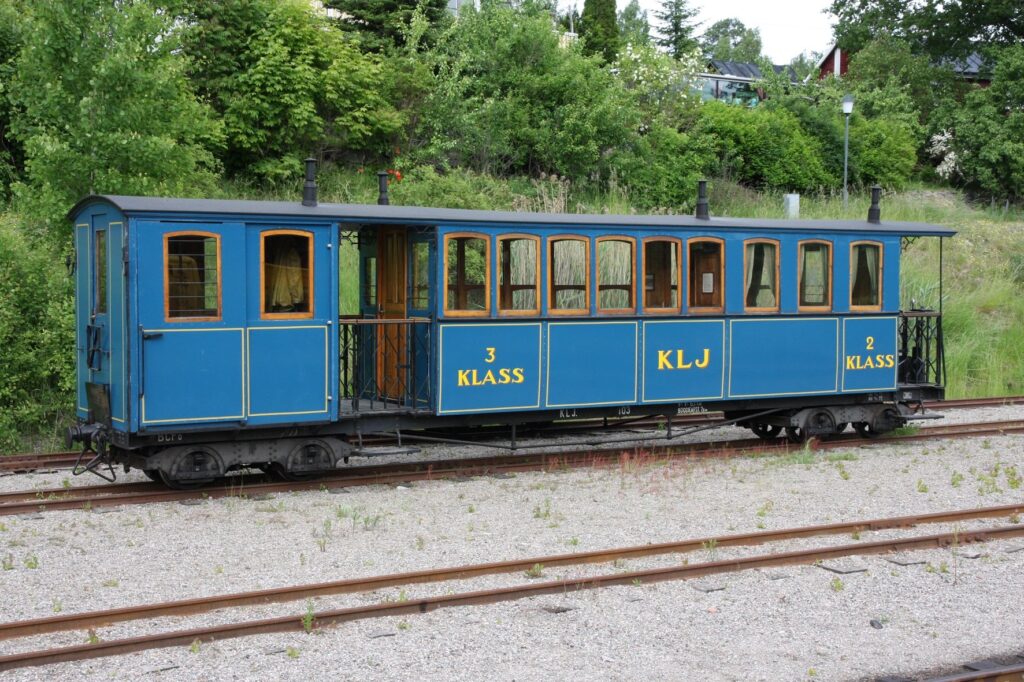
This carriage is modeled after Decauville’s designs, but was made by the german company R. Dolberg in 1893. It originally had a compartment for freight that was repurposed as a ladies compartment in 1905. The outer sheet metal cladding was replaced by wooden panels in 1917. It was decommissioned by 1931 and was turned over to Sweden’s railway museum in 1948. It was brought to ÖSlJ in 1959 and was renovated in 1971 where it once again was given sheet metal cladding on the outside. It has since then been in service at ÖSlJ.
MJ Co 1
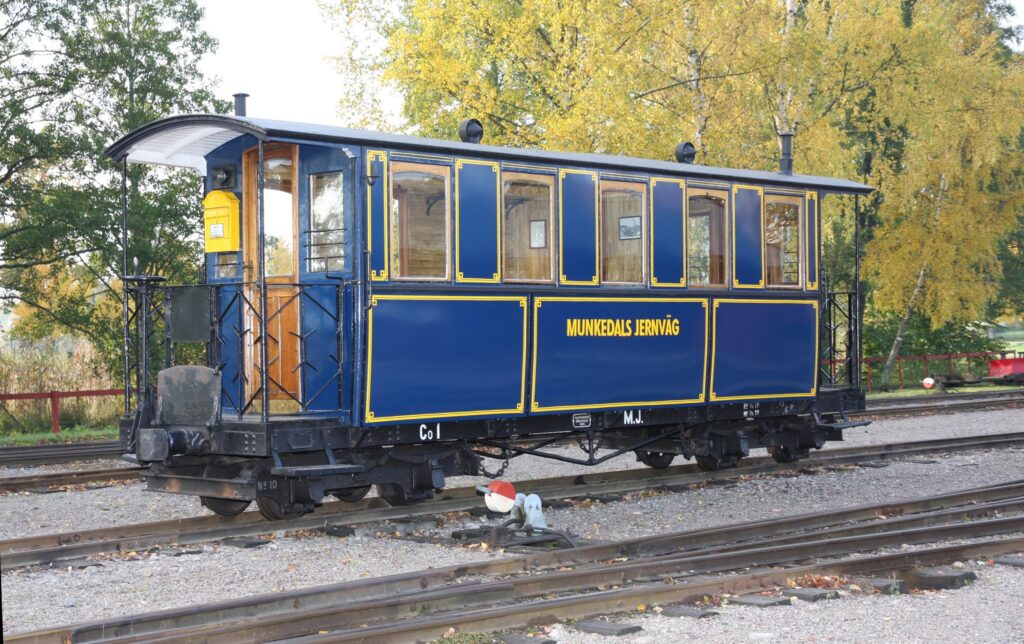
VABIS built this carriage in 1894. The design is the usual Swedish type, but three meters shorter than standard. It contained a mail compartment for a while. The outer sheet metal cladding was replaced by wood panels in 1930. It was used as a cottage between 1956 and 1959, after which it was brought to ÖSlJ and put into service. The interior has since then been renovated and the sheet metal cladding has been replaced.
MJ CIo 21
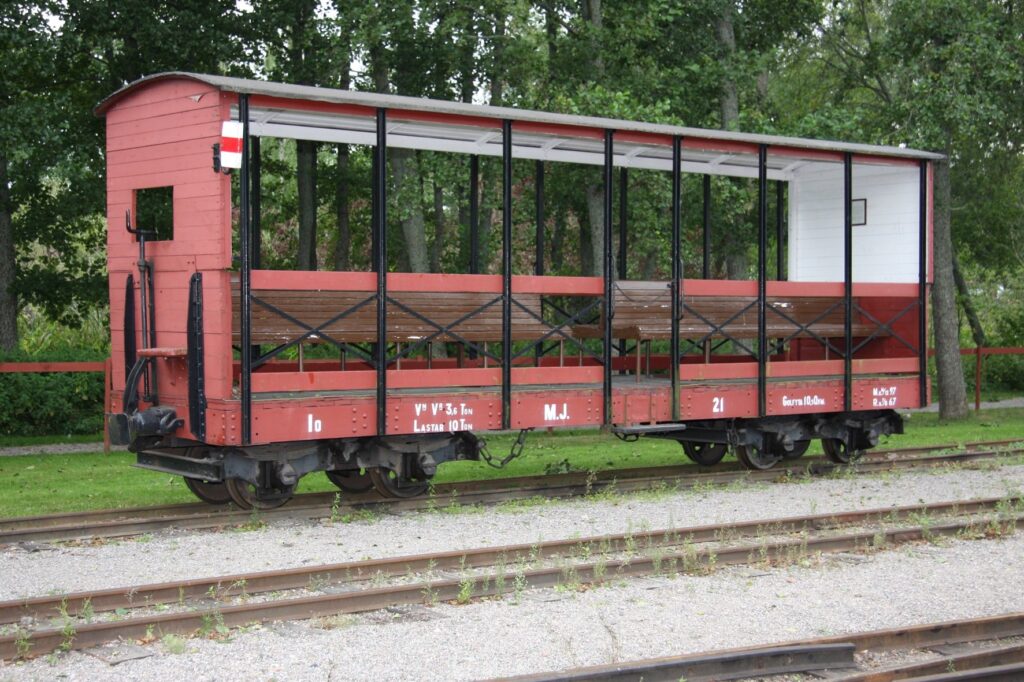
VABIS also built this carriage, originally in a series of freight carriages, and was given the classification Io 51. During summers between 1906 and 1935 the body was replaced with one that had walls, a roof and benches for seating. The framework came to ÖSlJ in 1965, but the body has been reconstructed. It is usable, but for the moment on loan to the heritage railway in Munkedal.
NAEJ BCo 3
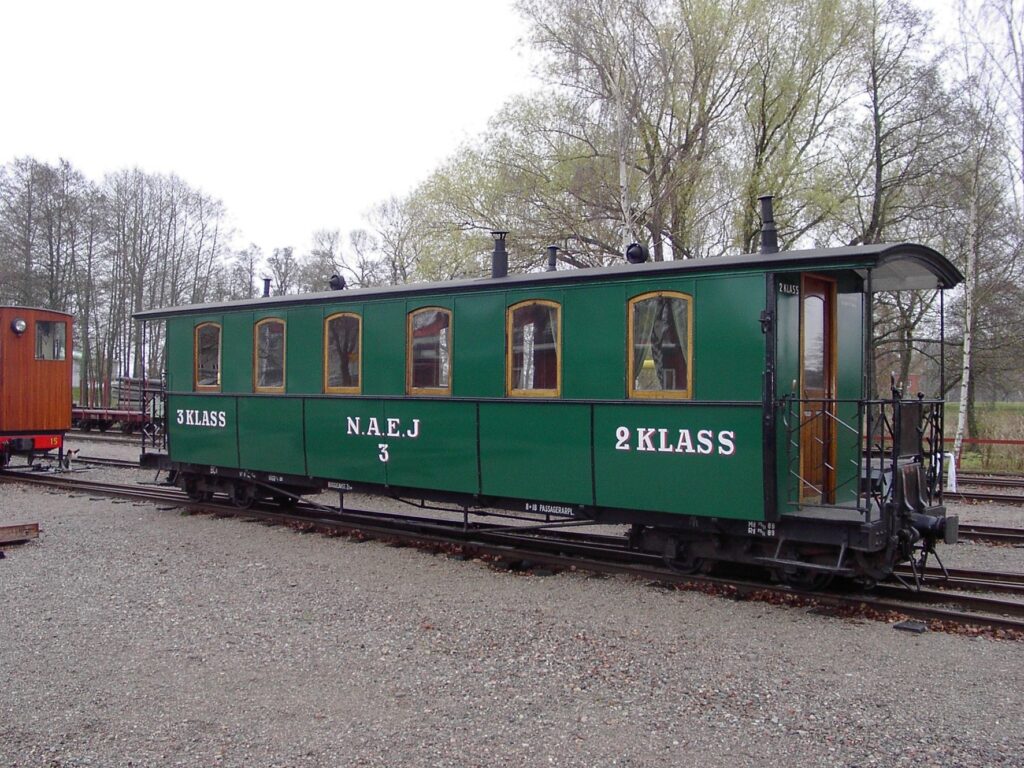
Kosta Foundry and Mechanical Workshops built this carriage, originally classified as Co 3 in 1907. The ladies compartment was turned into a second class compartment in 1933. At the same time, the outer sheet metal cladding was replaced by masonite. When NAEJ was closed down, the carriage was sold to Aspa pulp mill as staff quarters. ÖSlJ acquired ownership of the carriage in 1962. The outer cladding was returned to its original condition along with some other modifications, for instance brakes on both bogies. It has been in use since then.
NAEJ BCo 4
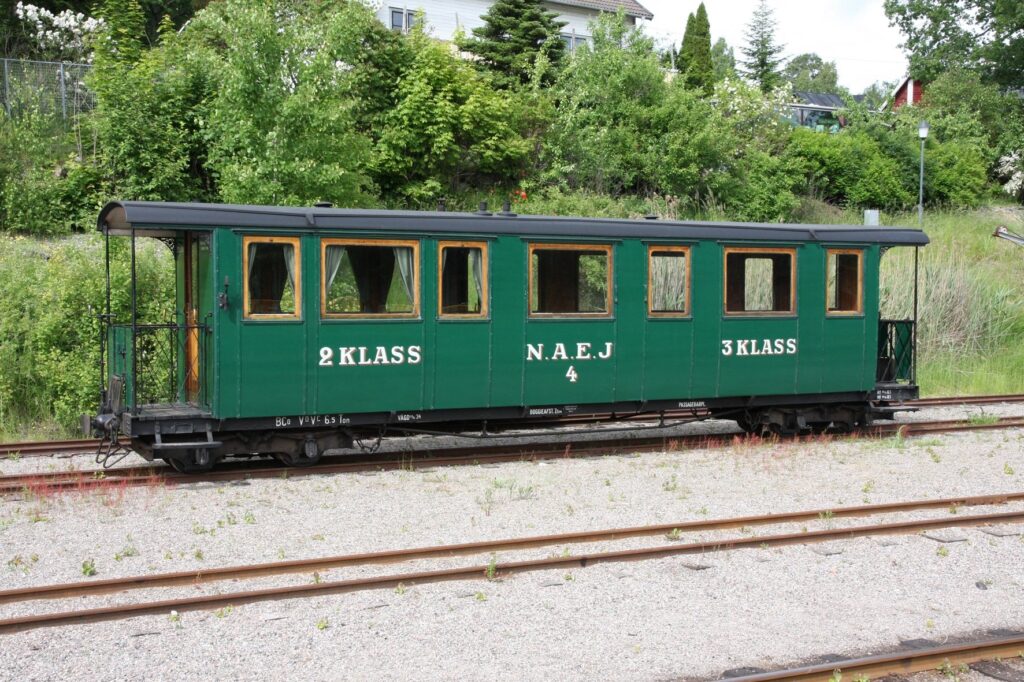
This carriage was sold to NAEJ by VABIS in 1910 and thus became the last manufactured passenger carriage for a Swedish 600 mm-railway. It differs from the standard Swedish model by its high roof and window placement. It was used as a cottage between 1939 and 1971, after which it was brought to ÖSlJ. The frame has been reconstructed and the body is heavily renovated.
Stafsjö BCo 2
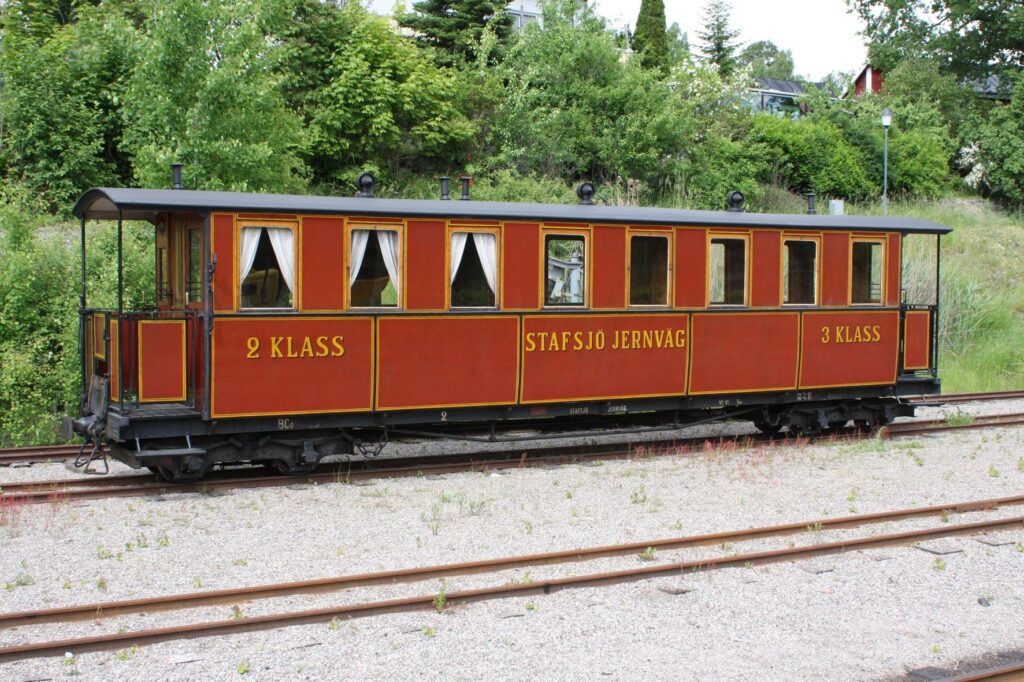
VABIS built this carriage, a standard Swedish 600 mm passenger carriage, in 1902. It was used without any retrofits and was ultimately sold to Eds Cellulosa AB. The body became a toolshed while the framework was repurposed as a freight carriage. ÖSlJ gathered the parts and brought them to Mariefred in 1966, renovated the carriage and put it into service.
Stafsjö BCo
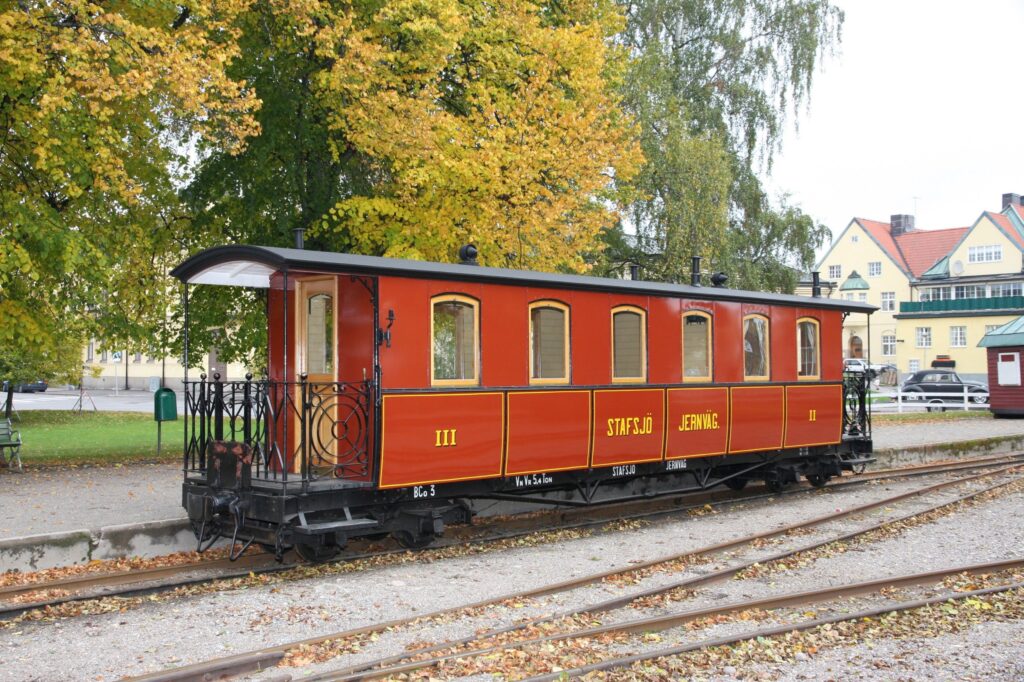
This carriage is also of the Swedish standard type, but built by Kosta Foundry and Mechanical workshop in 1903. It was decommissioned in 1933 and the framework was sold to Eds Cellulosa AB in 1939, where it was shortened. The body was sawed in half and the other half disappeared. The parts were brought to ÖSlJ in 1969 and the carriage was reconstructed, partly in ÖSlJ’s own workshops, partly in an external workshop on very favourable terms. It was completed in 2007.
ÖSlJ CN 81
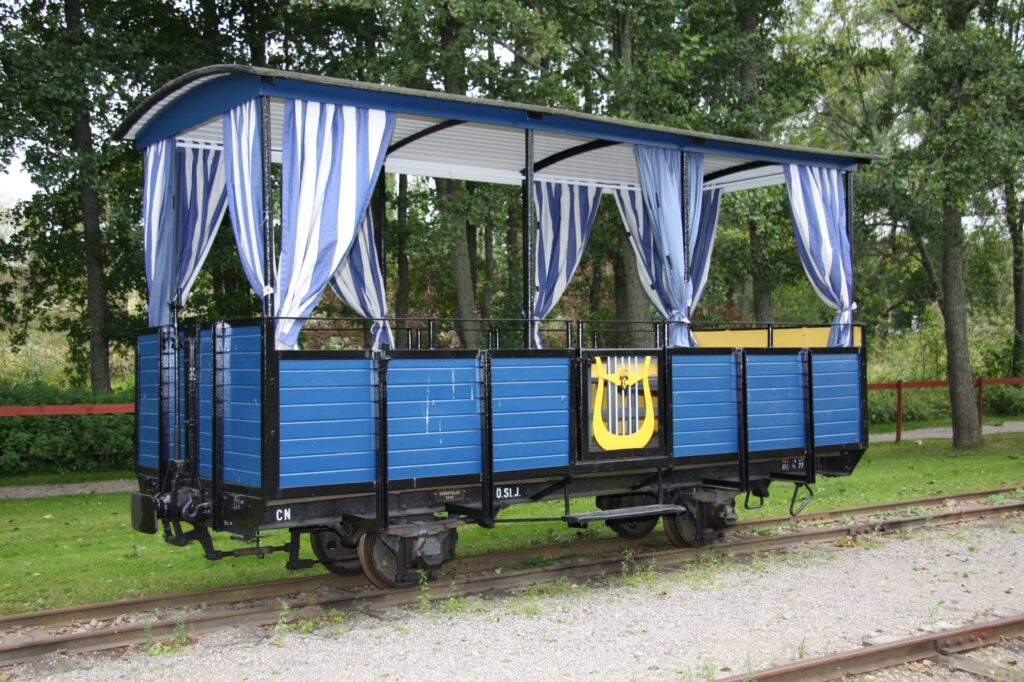
A NAÄJ freight carriage, originally classified KN 3 no. 60. It was retrofitted with a roof and benches at ÖSlJ. Primarily used as a break room for the staff.
ÖSlJ Ao 82
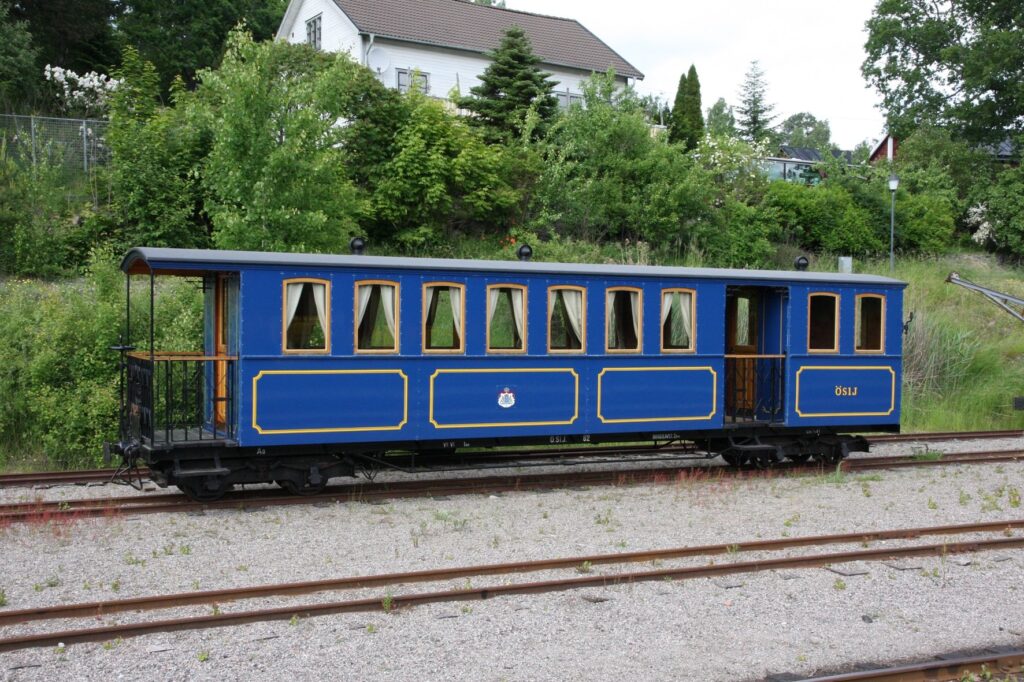
“The King’s carriage” is a work of fiction inspired by KLJ 103. The body is built by the Fredriksson brothers carpentry, while the framework is built by the workshop at Åkers. The bogies were overhauled at ÖSlJ. The carriage lacks any predecessor and represents only itself, but is thus unique in that regard.