
Locomotive 1, Lotta
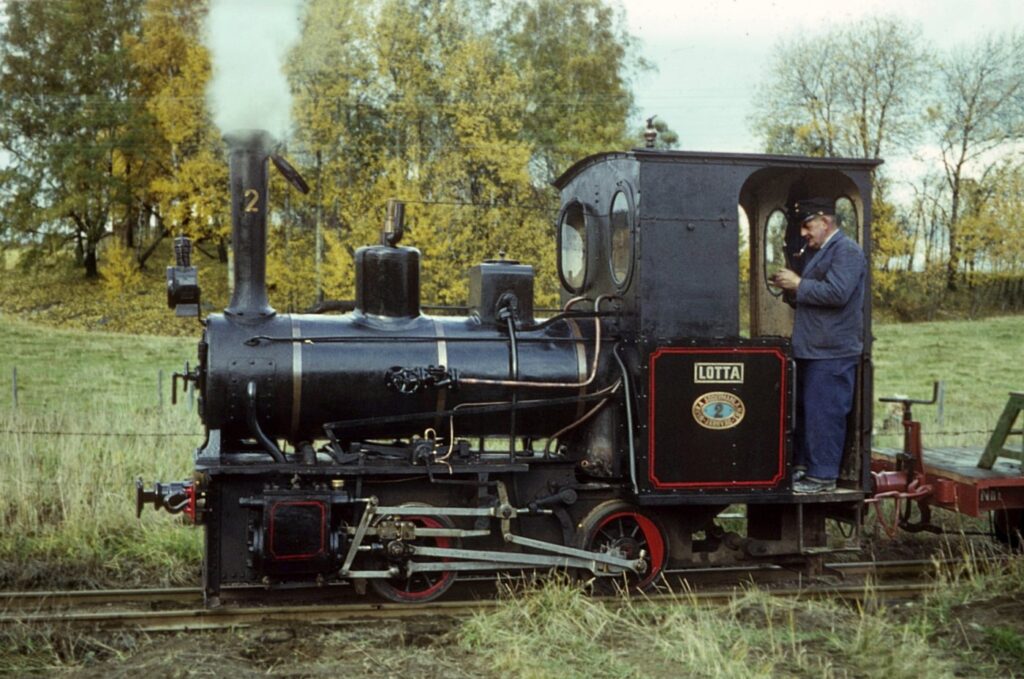
The locomotive is Orenstein & Koppels no. 6620, manufactured 1913 and bought by Statens Jernvägsbyggnader (The States Railway building enterprises) the following year. The locomotive was sold to Kolsva feldspar mine in 1928. It was decommissioned in 1952 and was brought to ÖSlJ in 1959. During the first years of ÖSlJ, when operations were confined to Lina brickyard, it was the only locomotive in operation.
The locomotive has rarely been used since 1970 and was decommissioned in 1990 due to rust in the stays of the firebox. The locomotive was on lease to Stockholms Technical Museum between 1996 and 2009.
Rarely used due to very poor stays in the boiler.
Locomotive 2, Virå
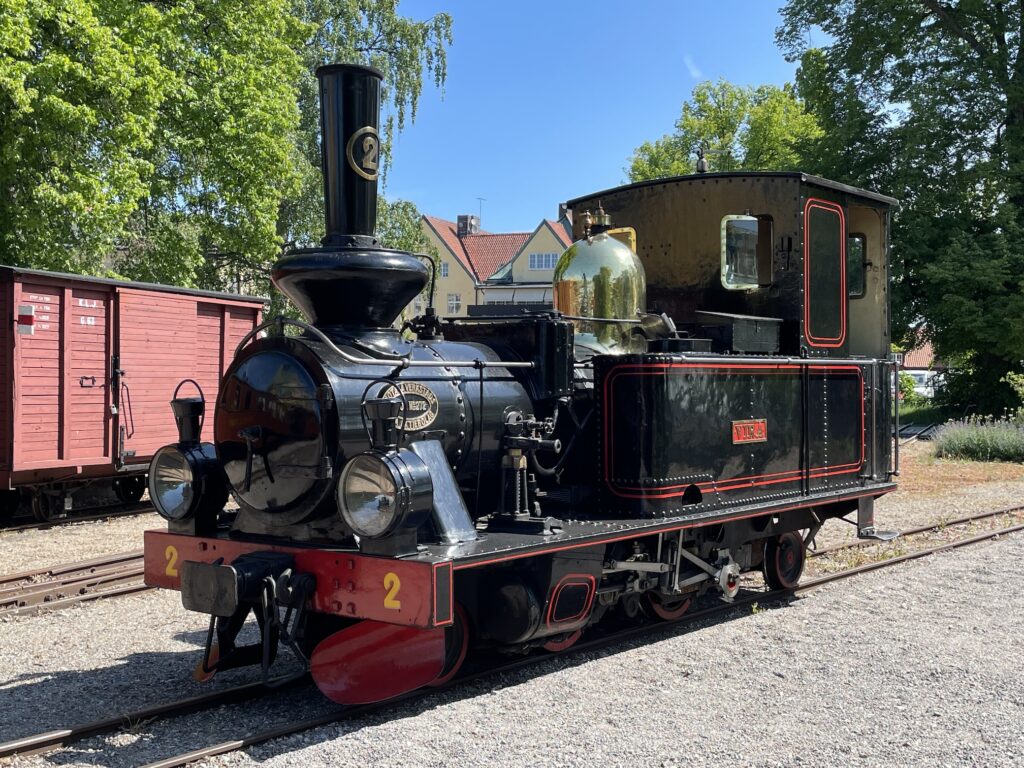
Motala works built Virå and the scrapped sister locomotive Stafsjö in 1901 for Stafsjö Railway. Virå was sold to Björkåsens mines in northern Norway in 1919, where it was in use until the 1950s. It was brought to ÖSlJ in 1965. The locomotive had its boiler replaced in 1939, so after a thorough refreshment it was put into operation at ÖSlJ in 1967. It has since then gone through several minor overhauls. Issues with the firebox resulted in a new one being ordered from a brittish manufacturer. The locomotive resumed operations in spring 2014.
Used only in limited extent due to worn valve and running gear.
LESSEBO
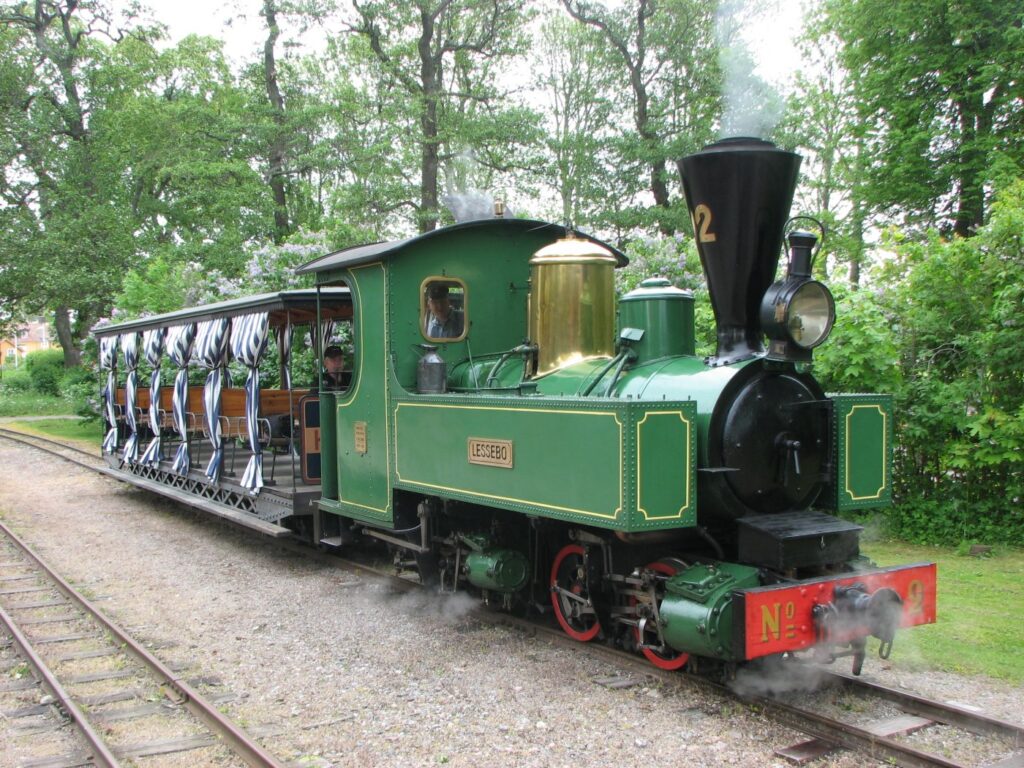
Manufactured by Munktell in 1891. Delivered to Kosta –Lessebo Railway in 1891 as KLJ locomotive no. 2. It was sold to Munkedals Railway in 1948, and later to the Swedish railway museum in 1955. After a few touch ups, the locomotive was on display at the museum from 1970 and forwards. ÖSlJ has the locomotive at our disposal since 2003.
Not in use.
Locomotive 3, Dylta
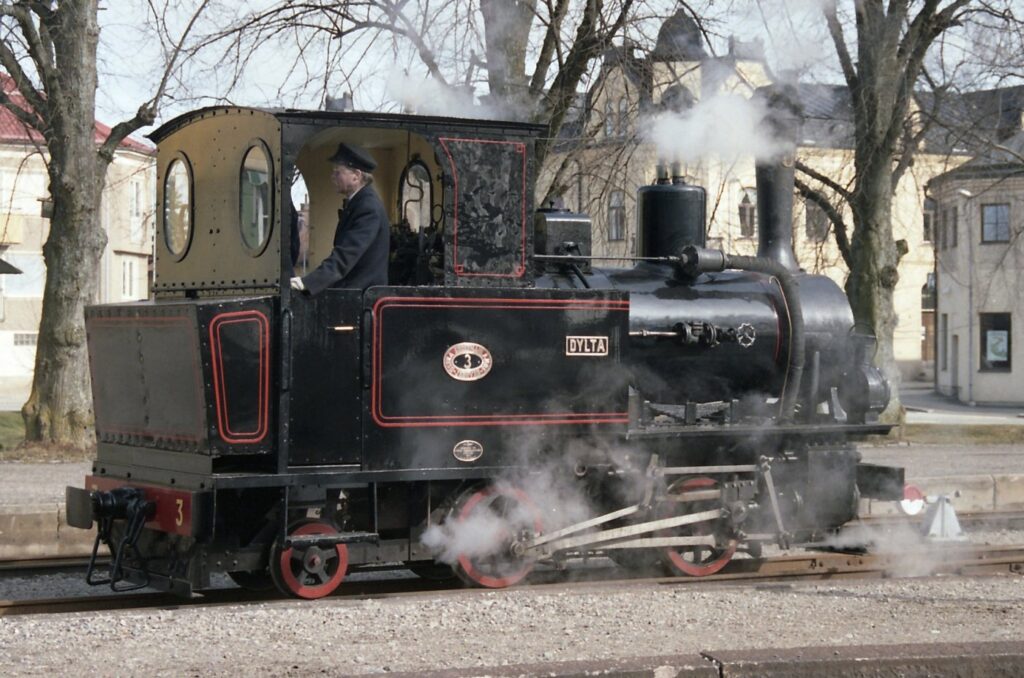
Dylta is a mid-size locomotive built for industrial use by Orenstein & Koppel some time during the first world war. It was used at lime kilns in Sala and in Jämtland county, and from 1946 at a factory in Dylta, Närke county. It was often decommissioned during the 1950s and was brought to ÖSlJs original location at Lina tegelbruk in 1960 where it faced frequent use. The boiler and firebox were overhauled in 1950. ÖSlJ lengthened the frame, added a rear trailer axle, and expanded the coal box.
The boiler has since shown age-related issues, leading to the locomotive not currently being in use.
Locomotive 4, K.M. Nelson
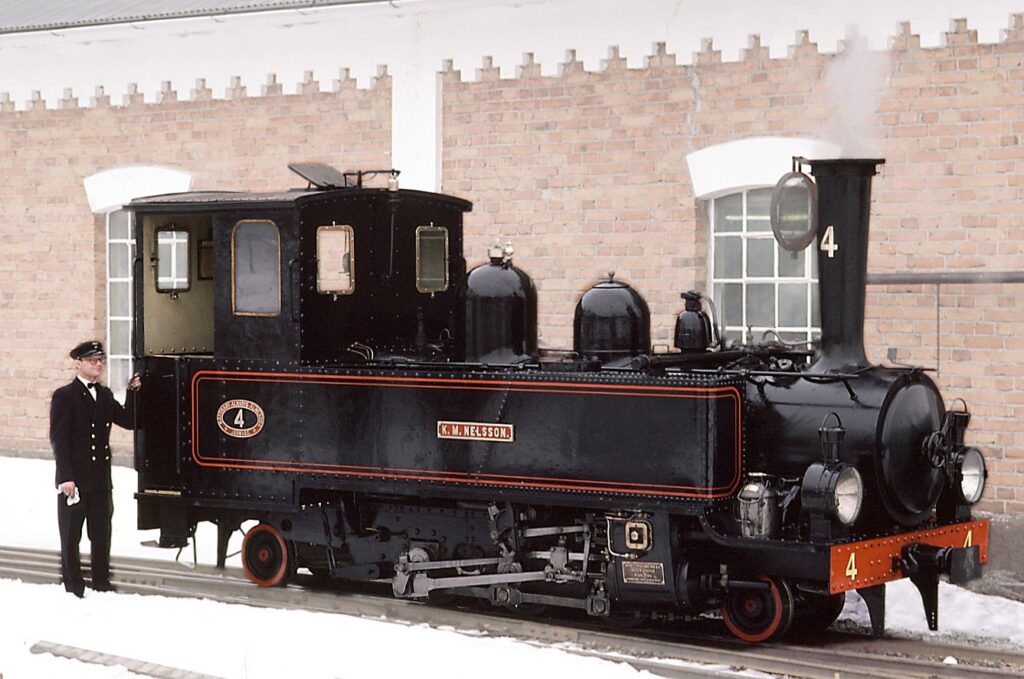
The locomotive is Motala works first superheated steam locomotive for the gauge 600 mm and was built for Nättraby – Alnaryd – Älmeboda Railway in 1914. The locomotive was sold to Aspa factories in 1946 and after a few years of service came to ÖSlJ in 1967. The locomotive underwent a major overhaul between the years 1972 to 1975, receiving new tubes in the boiler and even a new firebox in the late 1970s. The locomotive has since then been in operation for at least 30 seasons and is still in very good condition, but new tubing in the boiler and a new firebox are necessary.
A major overhaul of the locomotive began in late 2020 and is currently ongoing.
Locomotive 5, Hamra
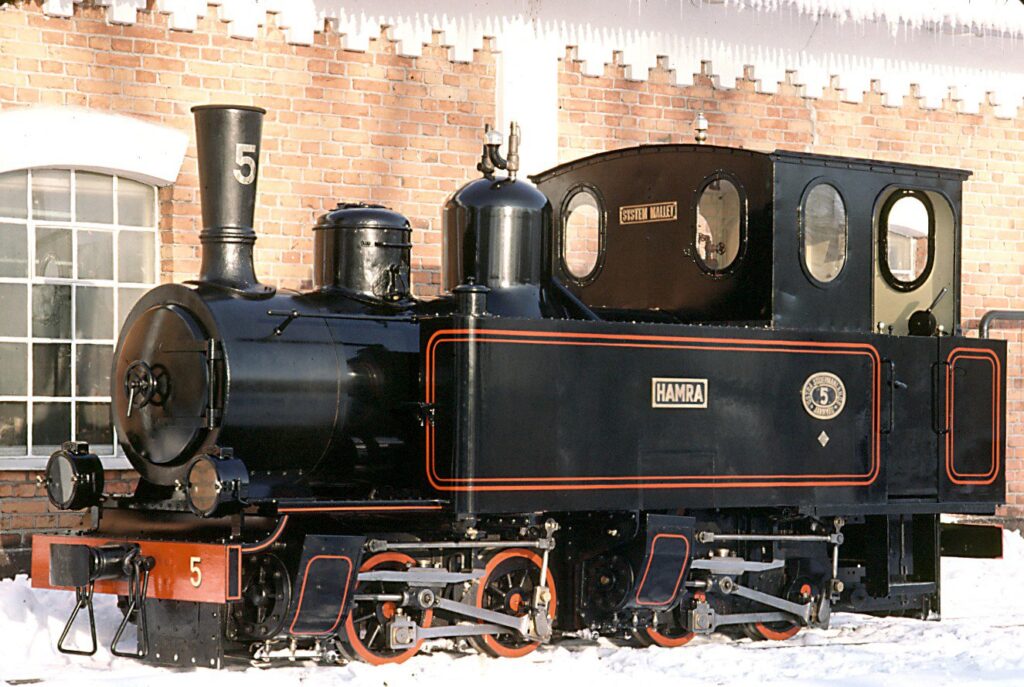
Separator AB in Tumba, bought Hamra from Orenstein & Koppel in 1902. After the tracks at the factory were closed the locomotive was sold to Ars limestone mine in 1947, where it saw use for approximately ten years. Hamra was brought to ÖSlJ in 1961, was renovated under very primitive circumstances and was put into operation in 1964. After a few years the renovations continued and the locomotive was extensively used, but the boiler was declared unfit for use in 1975. The company Separator AB had by now changed its name to Alfa Laval, and offered to cover the expenses for a new boiler. At the same time, the locomotive continued to receive minor overhauls. The locomotive was put back into operation in 1985 and has since seen extensive use.
An overhaul of the running gears were completed in 2019 and the locomotive has since been used frequently.
Locomotive 7, Helgenäs
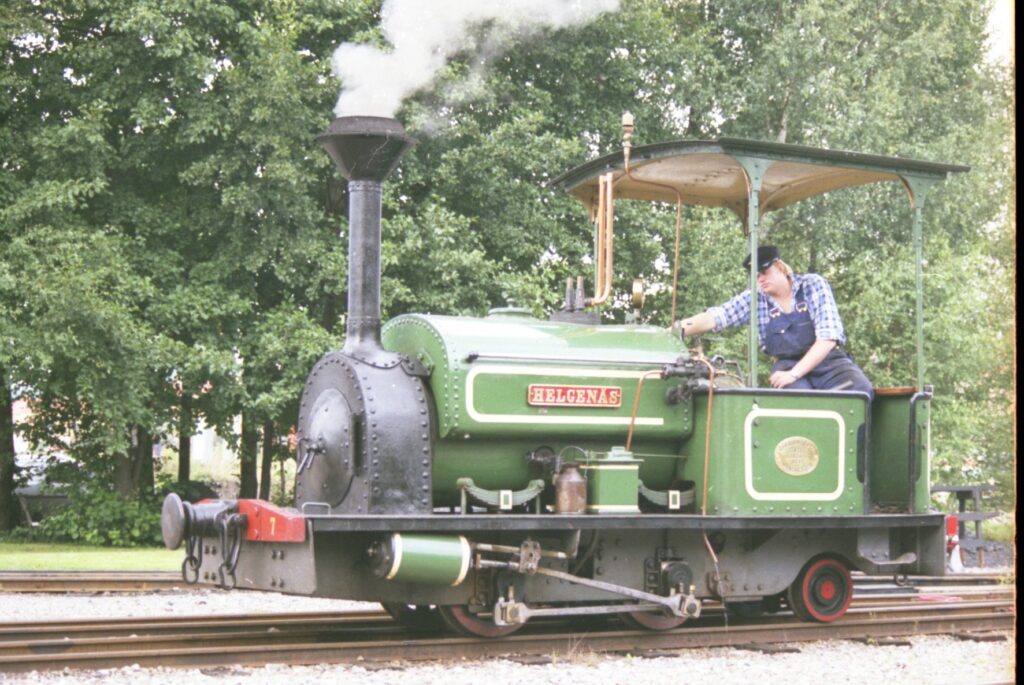
Helgenäs was built by Hudswell, Clarke & Co in 1889 for Eds iron and paper mill near Västervik. It was decommissioned in the 1930s and was donated to ÖSlJ in 1965. After a thorough overhaul the locomotive has been used since 1970, primarily for visitors to try and drive a steam locomotive.
Not in use. The locomotive has been decommissioned since the year 2000 due to a poor boiler. An overhaul is planned to start in a few years.
Locomotive 8, Emsfors
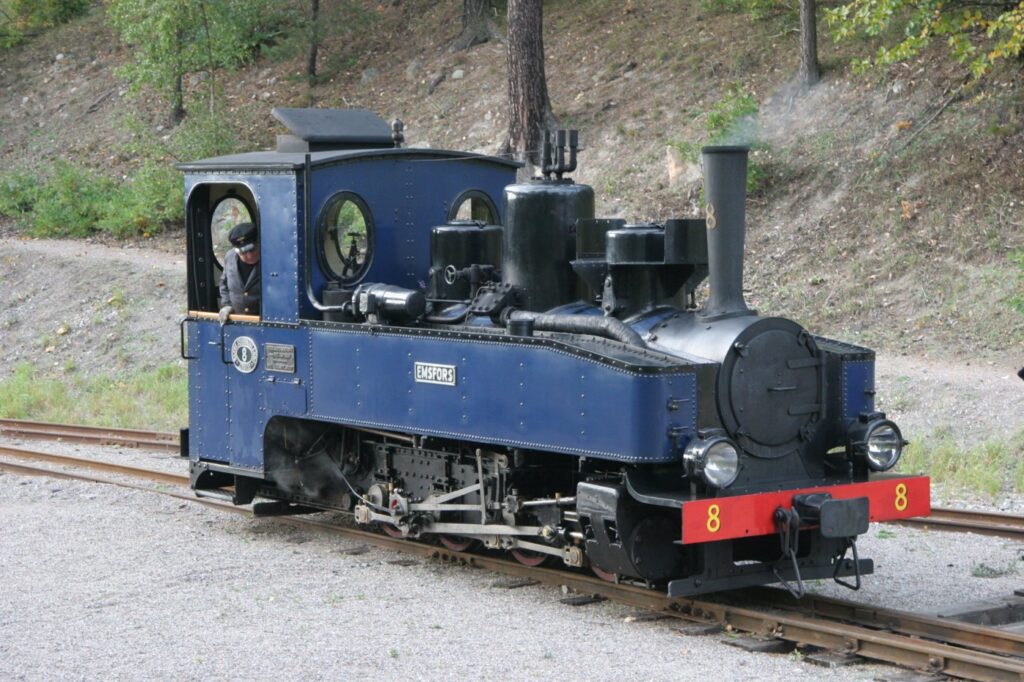
Emsfors is a so-called “Brigade engine”. Over 2500 locomotives were built by german factories for use during the first world war. Our locomotive was built by Hartmann and was sold to Emsfors paper mill around 1920 where it was used until 1952. It was gifted to ÖSlJ in 1969 and was put into operation the following year. The running gear has since then been gradually renovated and the locomotive now sees frequent use.
Locomotive 9, Nian
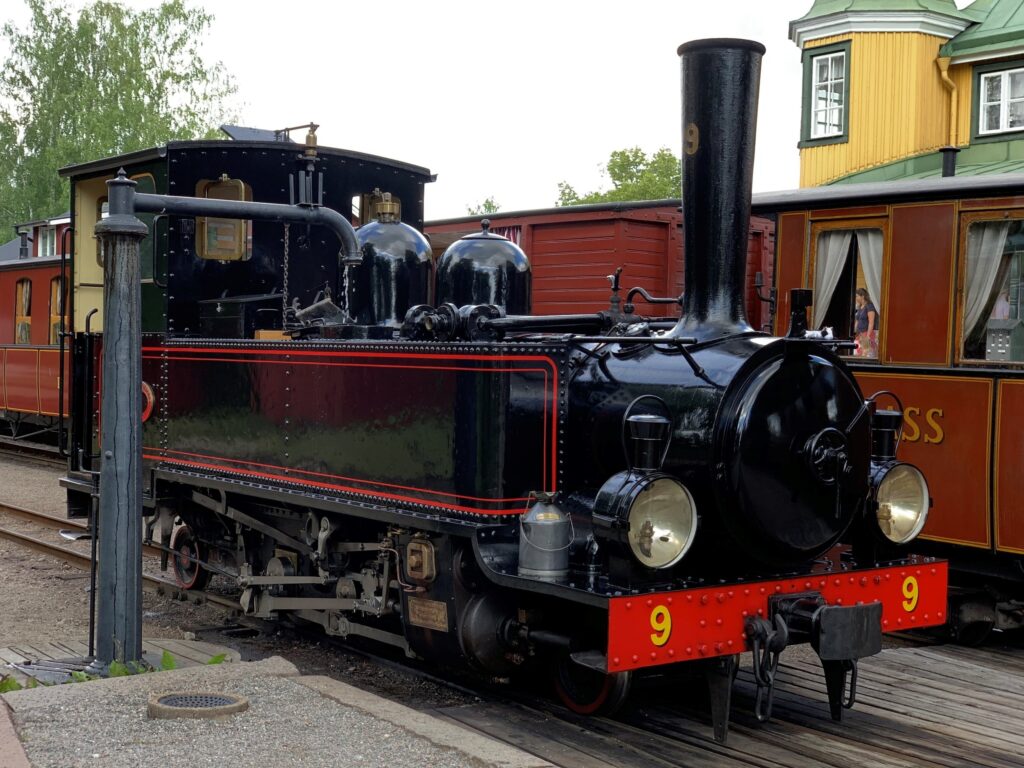
This locomotive was built by Motala works in 1915 and sold to the Jönköping – Gripenberg railway. It was sold to Aspa pulp mill in 1935. It was brought to Skärstads local community association as part of their exhibit of the local industries. The locomotive was leased to ÖSlJ for 10 years in 2005. An overhaul was started in 2006, and the locomotive was ready to be put into operation by 2009. The lease has since then been renewed several times, letting ÖSlJ use and maintain the locomotive for the foreseeable future.
The locomotive received a minor overhaul during the winter 2019/2020 and is used frequently.
Locomotive 10, Avesta
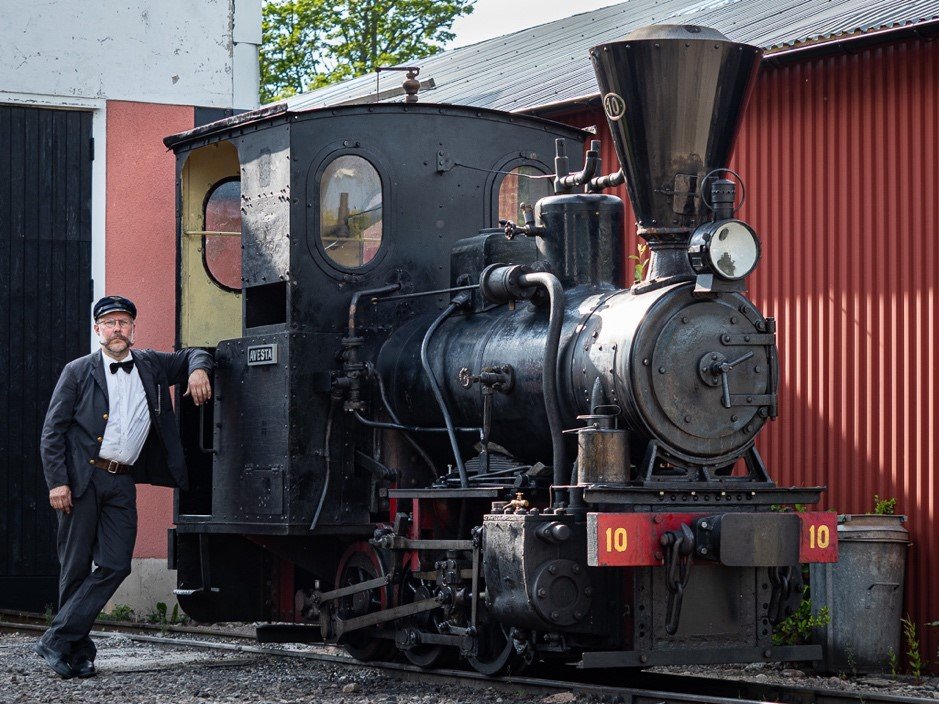
Avesta is a small locomotive made for industrial use built by Orenstein & Koppel in 1923 for the industrial railways at Domänverket (state owned forestry management). It pulled lumber trains up until 1937, and was used in Avesta iron mill from 1945. The locomotive was fitted with a boiler from a similar locomotive in 1954 when the latter was decommissioned. It was brought to ÖSlJ in 1986 where we had the locomotive at our disposal until further notice. It was put into use in 1989, primarily being used for shunting and minor excursions. The locomotive has recently been put back into service after having received new tubes and a new boiler, amongst other things.